
The Story of How a Railway Network Became Dubai’s Urban Backbone
Late evening. Sheikh Zayed Road is still alive with movement.
Office towers glow across the skyline. Trains slide above the traffic in near silence. At one station, professionals head home after work. At another, tourists step off with luggage from the airport. Somewhere farther ahead, a student boards near Academic City while construction teams continue tunnelling beneath future corridors that do not yet exist on the map.
This is no longer simply public transport.
The Dubai Metro has become the invisible structure around which modern Dubai operates.
What began in 2009 as an ambitious mobility project has evolved into one of the most important urban development systems in the region – influencing not only transportation, but also real estate values, business districts, investment patterns, and how entire communities are planned.
Today, Dubai’s metro story is entering another major chapter.
With the upcoming Blue Metro Line scheduled for 2029 and the ambitious Gold Metro Line targeted for 2032, the city is moving toward a much larger vision: a fully integrated, future-ready urban network aligned with the Dubai 2040 Urban Master Plan.
And increasingly, the metro is not merely following the city’s growth.
It is shaping where that growth happens next.

The Beginning: When the Red Line Changed Dubai
On 9 September 2009, the Red Line launched – a bold step in a city known for highways and cars. What seemed experimental quickly became essential.
Connecting the airport to Deira, Downtown, Business Bay, Marina, Jebel Ali and later Expo City, it reshaped how Dubai moved – and how it grew.
Areas near stations saw rising demand, stronger occupancy, and increasing property values. Districts like Business Bay, Marina and Jebel Ali evolved into some of the city’s most connected hubs.
The Metro didn’t just support development.
It accelerated it.
The Green Metro Line Expanded Dubai Beyond the Main Corridor
Two years later, on 9 September 2011, the Green Metro Line began service, extending the Metro beyond the main business corridor and into the heart of everyday Dubai.
Connecting Deira, Bur Dubai, Al Qusais, Al Nahda and Dubai Healthcare City, it linked older, densely populated neighborhoods to the wider city, easing congestion and improving daily movement.
Infrastructure must expand ahead of population growth – not after congestion becomes unmanageable.
That philosophy now defines Dubai’s future metro strategy.
Dubai Metro by the Numbers: A System That Became Essential
Over time, Dubai Metro evolved from infrastructure into daily necessity.
Current Performance Highlights
- 2.8+ billion passengers served since launch
- Approximately 295 million riders recorded in 2025
- Around 1 million daily users
- Nearly 40% share of Dubai’s public transport usage
The metro today functions as:
- a commuter system
- an economic enabler
- a tourism connector
- and a real estate catalyst
Its punctuality rate consistently exceeds global benchmarks, while station-centric communities continue to outperform in both rental demand and long-term occupancy.
The Blue Metro Line: Dubai’s Next Major Urban Expansion Corridor
If the Red Metro Line defined Dubai’s first metro era, the Blue Metro Line represents the next phase of urban expansion.
Scheduled to open on 9 September 2029, the Blue Metro Line is currently one of Dubai’s largest active infrastructure projects.
Blue Metro Line by the Numbers
- AED 20.5 billion investment
- 30-kilometre route
- 14 stations
- 15.5 km underground
- 14.5 km elevated
- 3 interchange stations
- Expected to serve over 1 million residents
The route has been strategically designed to connect emerging high-growth corridors rather than already mature central districts.
Which Areas Will the Blue Metro Line Connect?
The Blue Metro Line is expected to pass through several major growth zones including:
- Dubai Creek Harbour
- Dubai Silicon Oasis
- Academic City
- International City
- Al Warqaa
- Mirdif
This matters enormously from both an urban planning and investment perspective.
Historically, metro-linked districts in Dubai have experienced:
- stronger capital appreciation,
- faster leasing velocity,
- and improved long-term tenant demand.
The Blue Metro Line is expected to repeat that pattern.
Why Investors Are Watching the Blue Metro Line Closely
Infrastructure has always influenced property cycles in Dubai.
Metro expansion, however, tends to create particularly strong ripple effects because it directly changes accessibility.
Property Forecasts Around Future Stations
Properties located within approximately:
- 500 to 900 metres of stations
are projected to experience:
- 20-30% value appreciation by operational launch,
- along with stronger rental demand.
Areas such as:
- Academic City
- Dubai Silicon Oasis
- International City
have already witnessed rising rental activity and increased investor attention ahead of completion.
For many investors, the key opportunity window lies between:
2026-2028
before full infrastructure visibility pushes pricing higher.
The Gold Metro Line Could Become Dubai’s Most Ambitious Metro Project Yet
Beyond the Blue Metro Line lies an even larger long-term vision.
The Gold Metro Line, targeted for 9 September 2032, is being positioned as:
Dubai’s largest sustainable transport initiative to date.
Unlike earlier phases, the Gold Metro Line is expected to function as a fully integrated underground mobility corridor designed around future population density and long-term urban expansion.
Gold Metro Line Overview
- AED 34 billion investment
- 42 km underground corridor
- 18 stations
- Up to 40 metres underground
- Network expansion from 120 km to 162 km
- Total stations expanding from 67 to 85
This is not merely an extension.
It represents the next evolution of Dubai’s transport infrastructure model.
Why the Gold Metro Line Matters Beyond Transportation
The Gold Metro Line is expected to support:
- 1.5 million residents by 2040
- over 55 major developments
- and approximately 15 growth corridors
Strategically, it will:
- intersect with the Red Metro Line
- connect with the Green Metro Line
- and integrate with future transport systems including Etihad Rail
The objective is clear:
create a fully interconnected mobility ecosystem that supports Dubai’s next decades of expansion.
Infrastructure Is Quietly Becoming One of Dubai’s Biggest Real Estate Drivers
For years, Dubai’s property conversation centered heavily around:
- waterfront views
- branded residences
- and luxury launches
That narrative is evolving.
Increasingly, infrastructure accessibility is becoming one of the strongest determinants of:
- rental performance
- occupancy stability
- and long-term asset resilience
Properties within walking distance of metro stations consistently command:
- stronger rental demand
- faster tenant absorption
- and higher long-term liquidity
As Dubai expands outward through the Blue and Gold Metro Lines, entirely new investment corridors are emerging.
And many of them are still in early-cycle pricing phases.
Dubai Metro and the Dubai 2040 Urban Master Plan
The metro expansion strategy is deeply tied to Dubai’s broader long-term planning framework.
Under the Dubai 2040 Urban Master Plan, the city aims to:
- improve sustainable mobility
- reduce vehicle dependency
- increase public transport integration
- and create more connected urban communities
The metro is central to achieving that vision.
Future development is increasingly being planned around:
- transport-oriented communities
- mixed-use corridors
- and high-density urban nodes linked directly to metro infrastructure
This approach mirrors some of the world’s most advanced metropolitan planning models.
Final Thoughts: Dubai’s Metro Is No Longer Just Transportation – It’s Urban Strategy
From the launch of the Red Metro Line in 2009 to the planned Gold Metro Line in 2032, Dubai Metro tells the story of a city building ahead of its own growth.
Each expansion has done more than carry passengers – it has shaped neighbourhoods, influenced property growth, redirected investment, and strengthened Dubai’s global standing.
The Red Line built the backbone.
The Green Line connected communities further.
The Blue Line opens new growth corridors.
And the Gold Line could take mobility to an entirely new scale.
For residents, it brings connection.
For commuters, ease.
For investors, opportunity.
Above all, it reflects something deeply Dubai – a city that builds not just for today, but for the future it believes in.


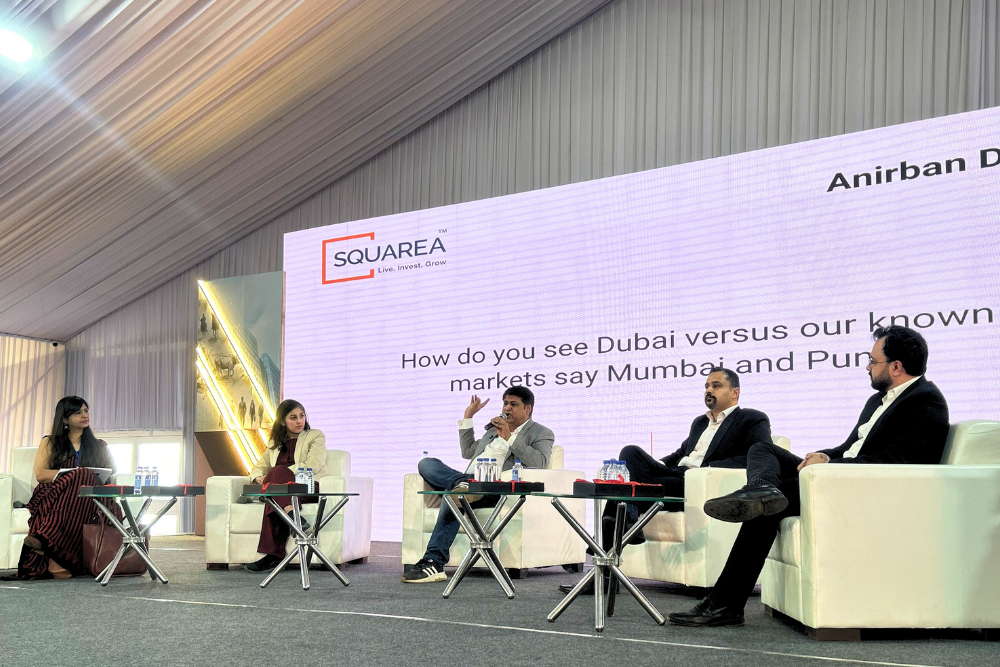 The discussion examined globalization of Indian companies, global mobility trends among family offices and UHNIs, corporate banking considerations, business formation in the UAE and the evolving outlook for Dubai real estate markets. The session addressed how Indian promoters are approaching international diversification through structured capital allocation rather than opportunistic investments.
SQUAREA’s participation as principal sponsor aligned with the broader objective of enabling Indian businesses to approach global markets in a structured and compliant manner, particularly as more mid-sized enterprises begin exploring cross-border growth alongside domestic expansion.
Interactions during the event indicated increasing familiarity among Indian businesses with global markets, particularly those geographically and operationally accessible, and highlighted the importance of clarity in decision-making before entering new jurisdictions The MEA International Business Expo 2026 served as a meeting ground between capital, enterprise and policy, highlighting a growing shift where regional entrepreneurs are actively evaluating international diversification as part of long-term business strategy rather than as an alternative to India-focused growth.
The discussion examined globalization of Indian companies, global mobility trends among family offices and UHNIs, corporate banking considerations, business formation in the UAE and the evolving outlook for Dubai real estate markets. The session addressed how Indian promoters are approaching international diversification through structured capital allocation rather than opportunistic investments.
SQUAREA’s participation as principal sponsor aligned with the broader objective of enabling Indian businesses to approach global markets in a structured and compliant manner, particularly as more mid-sized enterprises begin exploring cross-border growth alongside domestic expansion.
Interactions during the event indicated increasing familiarity among Indian businesses with global markets, particularly those geographically and operationally accessible, and highlighted the importance of clarity in decision-making before entering new jurisdictions The MEA International Business Expo 2026 served as a meeting ground between capital, enterprise and policy, highlighting a growing shift where regional entrepreneurs are actively evaluating international diversification as part of long-term business strategy rather than as an alternative to India-focused growth.