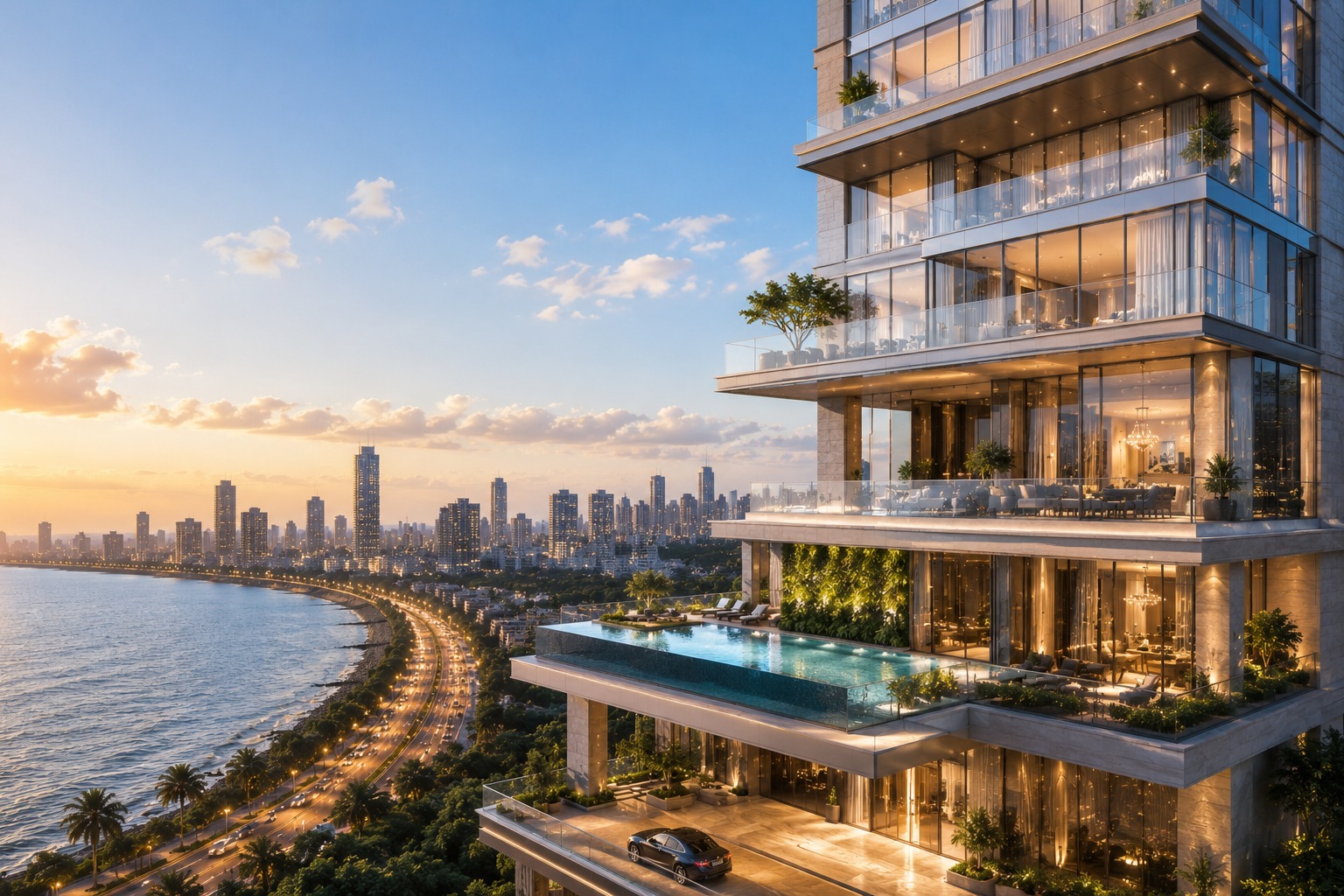
60%+ Growth Projections Signal a Luxury Market Transformation in 2026 and Beyond
- 60% – Projected India growth by 2027
- 30-40% – Price premium over standard luxury
- 6th – India’s global rank, live projects
- 19% – Global YoY growth in branded schemes
KEY TAKEAWAYS
- The market is projected to grow nearly 60% by 2027, with some forecasts pointing to as much as 200% by 2031.
- Buyers are paying 30-40% more, and getting stronger resale value and rental yields in return.
- NRIs from the Middle East, UK and US are driving significant capital into this space.
- Not every project justifies the premium; due diligence on the brand agreement and developer track record is critical.
The Indian branded residences segment is considered one of the rapidly developing segments within the luxurious real estate market of the country, which will witness nearly 60% growth till 2027 owing to increasing demands from wealthy Indians, Non-Resident Indians (NRIs), and international brands (Business Standard, 2026). Such homes are sold at almost 30-40% higher prices compared to ordinary luxurious homes because of the design features and services provided along with their investment value. Based on our experience in real estate, banking, and financial services from India and Dubai, we have observed that.
India currently ranks 6th worldwide for live branded residence projects, accounting for approximately 4% of global supply and stands in the top 10 for upcoming pipeline.
01 – THE CATEGORY
Understanding Branded Residences: What Makes Them Unique?
Branded residences are developed in partnership with global brands, typically from hospitality, fashion, design or lifestyle sectors, who contribute their design language, operational standards and reputation. Unlike conventional luxury housing, they offer:
- Curated interiors and architecture aligned with the brand’s DNA
- Hotel-style amenities and concierge services
- Dedicated property management and wellness facilities
- Enhanced resale value and rental yields due to brand association
Global schemes are set to rise 19% year-on-year, from 764 (2024) to 910 (2025), with Asia Pacific supply up 55% over five years, led by India, Thailand and Vietnam (Savills, 2025). India ranks 6th worldwide for live projects, at about 4% of global supply, and sits in the top 10 for pipeline (Knight Frank, 2025).
02 – GROWTH DRIVERS
Key Drivers Fueling India’s Branded Residences Boom
- Surging HNWI and NRI wealth: rising incomes are creating a new generation of luxury buyers, while NRIs from the Middle East, UK and US channel significant capital into Indian real estate.
- Developer-brand collaborations: Armani/Casa (Lodha, Mumbai), Trump Towers (Mumbai, Gurugram, Pune), Four Seasons (Mumbai, Bengaluru), and lifestyle brands like Versace Home and YOO.
- Strong market fundamentals: India’s premium housing segment (₹5-20 crore+) is on an upcycle, with buyers prioritizing larger homes and lifestyle upgrades.
- Global brand interest: international brands see India as a high-growth frontier, given urbanization and improving infrastructure in Mumbai, Delhi-NCR, Bengaluru, Pune and Goa.
- Investment appeal: branded properties deliver stronger capital appreciation and rental yields as both a home and a diversified asset.
03 – SCALE & GROWTH
Current Scale and 60%+ Growth Projections
India is projected to grow nearly 60% by 2027, with some forecasts as high as 200% by 2031 (Business Standard, 2026; Savills, cited in Zee News, 2025). Hotspots include Mumbai (Worli, Lower Parel), Delhi-NCR (Gurugram), Bengaluru, Pune, and select vacation destinations.
04 – THE FLAGSHIP PROJECTS
Spotlight on Major Branded Residence Projects in India
- Lodha World One & World Towers, Mumbai — Armani/Casa: One of Mumbai’s most prestigious addresses; benchmark for design collaboration at scale
- Trump Towers Mumbai (Worli) — Trump Organisation: Ultra-luxury units ranging from ₹6 crore to over ₹20 crore
- Trump Towers Gurugram — Trump Organisation: Large-scale multi-tower development with extensive amenities in Delhi-NCR
- Four Seasons Private Residences, Mumbai & Bengaluru — Four Seasons: Hospitality-grade service culture brought into a residential ownership model
- YOO Inspired by Starck projects — Philippe Starck / YOO: Fashion-forward design identity as a residential differentiator
- Versace Home affiliated developments — Versace: Signals expanding appetite for fashion and lifestyle brands beyond hospitality
These projects typically feature sky villas, private elevators, wellness spas, infinity pools and round-the-clock concierge services.
05 – THE INVESTMENT CASE
Benefits of Investing in Branded Residences
- Price Premiums: 30-40% higher selling prices, with stronger long-term capital growth.
- Lifestyle Elevation: hotel-style services reduce the burden of ownership while delivering exclusivity.
- Rental Yields: easier to attract premium tenants, including expats and HNWIs.
- Status & Recognition: association with brands like Armani, Four Seasons, Trump or Versace adds prestige.
- Diversification: a hedge against market volatility for domestic and international investors.
06 – WHAT TO WATCH
Challenges and Considerations for Stakeholders
- Regulatory and legal complexities: Blurred lines between residential and hospitality raise questions around RERA and approvals; clear contracts and local expertise are essential.
- Brand-developer alignment: Long-term agreements (often 10-30 years) must balance brand standards with local realities.
- Execution risk: Consistent hospitality-level service demands robust operations; under-delivery damages both developer and brand.
- Market saturation: As more projects launch, justifying premiums gets harder in some micro-markets.
- Economic sensitivities: Interest rates, geopolitics and currency fluctuations can affect NRI and investor sentiment.
07 – WHAT’S NEXT
Future Outlook: 2026-2030
India’s branded residences boom shows no signs of slowing, with continued HNWI wealth creation and global brand interest set to drive sustained double-digit growth (Business Standard, 2026).
- Expansion beyond Tier-1 cities into emerging luxury destinations
- Rise of wellness, sustainability and smart-home features
- More fashion, automotive and lifestyle brand entrants
- Stronger India-Dubai and broader international capital flows
Developers should aim for genuine brand fit; investors should do thorough due diligence on developer history, brand strength and legal structure.
The future of luxury real estate in India is branded and it is arriving faster than most expected.

 The Beginning: When the Red Line Changed Dubai
On 9 September 2009, the Red Line launched - a bold step in a city known for highways and cars. What seemed experimental quickly became essential.
Connecting the airport to Deira, Downtown, Business Bay, Marina, Jebel Ali and later Expo City, it reshaped how Dubai moved - and how it grew.
Areas near stations saw rising demand, stronger occupancy, and increasing property values. Districts like Business Bay, Marina and Jebel Ali evolved into some of the city’s most connected hubs.
The Metro didn’t just support development.
It accelerated it.
The Green Metro Line Expanded Dubai Beyond the Main Corridor
Two years later, on 9 September 2011, the Green Metro Line began service, extending the Metro beyond the main business corridor and into the heart of everyday Dubai.
Connecting Deira, Bur Dubai, Al Qusais, Al Nahda and Dubai Healthcare City, it linked older, densely populated neighborhoods to the wider city, easing congestion and improving daily movement.
Infrastructure must expand ahead of population growth - not after congestion becomes unmanageable.
That philosophy now defines Dubai’s future metro strategy.
Dubai Metro by the Numbers: A System That Became Essential
Over time, Dubai Metro evolved from infrastructure into daily necessity.
Current Performance Highlights
The Beginning: When the Red Line Changed Dubai
On 9 September 2009, the Red Line launched - a bold step in a city known for highways and cars. What seemed experimental quickly became essential.
Connecting the airport to Deira, Downtown, Business Bay, Marina, Jebel Ali and later Expo City, it reshaped how Dubai moved - and how it grew.
Areas near stations saw rising demand, stronger occupancy, and increasing property values. Districts like Business Bay, Marina and Jebel Ali evolved into some of the city’s most connected hubs.
The Metro didn’t just support development.
It accelerated it.
The Green Metro Line Expanded Dubai Beyond the Main Corridor
Two years later, on 9 September 2011, the Green Metro Line began service, extending the Metro beyond the main business corridor and into the heart of everyday Dubai.
Connecting Deira, Bur Dubai, Al Qusais, Al Nahda and Dubai Healthcare City, it linked older, densely populated neighborhoods to the wider city, easing congestion and improving daily movement.
Infrastructure must expand ahead of population growth - not after congestion becomes unmanageable.
That philosophy now defines Dubai’s future metro strategy.
Dubai Metro by the Numbers: A System That Became Essential
Over time, Dubai Metro evolved from infrastructure into daily necessity.
Current Performance Highlights


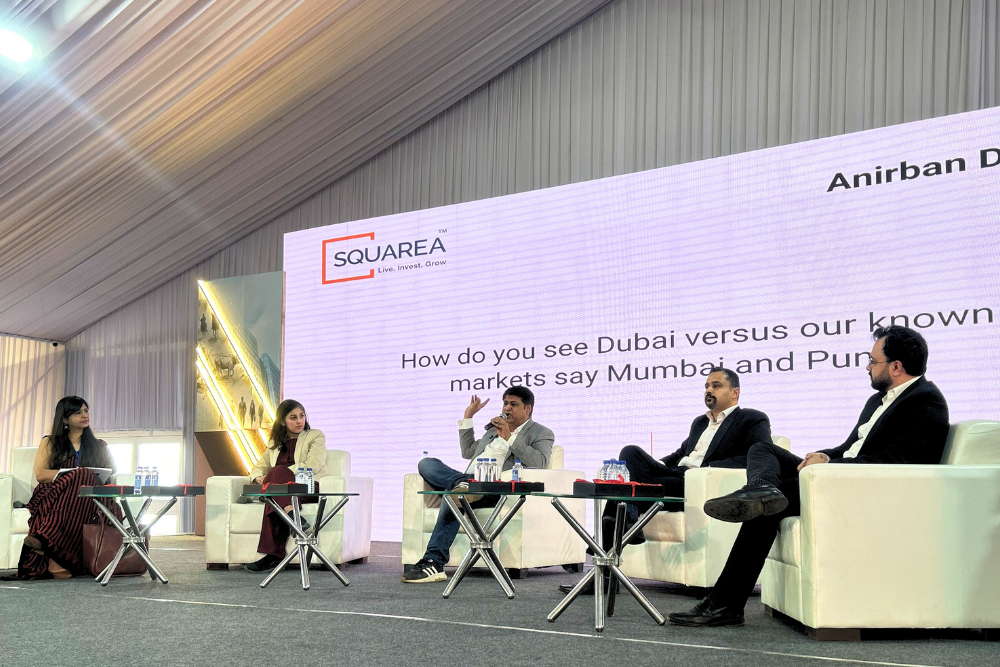 The discussion examined globalization of Indian companies, global mobility trends among family offices and UHNIs, corporate banking considerations, business formation in the UAE and the evolving outlook for Dubai real estate markets. The session addressed how Indian promoters are approaching international diversification through structured capital allocation rather than opportunistic investments.
SQUAREA’s participation as principal sponsor aligned with the broader objective of enabling Indian businesses to approach global markets in a structured and compliant manner, particularly as more mid-sized enterprises begin exploring cross-border growth alongside domestic expansion.
Interactions during the event indicated increasing familiarity among Indian businesses with global markets, particularly those geographically and operationally accessible, and highlighted the importance of clarity in decision-making before entering new jurisdictions The MEA International Business Expo 2026 served as a meeting ground between capital, enterprise and policy, highlighting a growing shift where regional entrepreneurs are actively evaluating international diversification as part of long-term business strategy rather than as an alternative to India-focused growth.
The discussion examined globalization of Indian companies, global mobility trends among family offices and UHNIs, corporate banking considerations, business formation in the UAE and the evolving outlook for Dubai real estate markets. The session addressed how Indian promoters are approaching international diversification through structured capital allocation rather than opportunistic investments.
SQUAREA’s participation as principal sponsor aligned with the broader objective of enabling Indian businesses to approach global markets in a structured and compliant manner, particularly as more mid-sized enterprises begin exploring cross-border growth alongside domestic expansion.
Interactions during the event indicated increasing familiarity among Indian businesses with global markets, particularly those geographically and operationally accessible, and highlighted the importance of clarity in decision-making before entering new jurisdictions The MEA International Business Expo 2026 served as a meeting ground between capital, enterprise and policy, highlighting a growing shift where regional entrepreneurs are actively evaluating international diversification as part of long-term business strategy rather than as an alternative to India-focused growth.