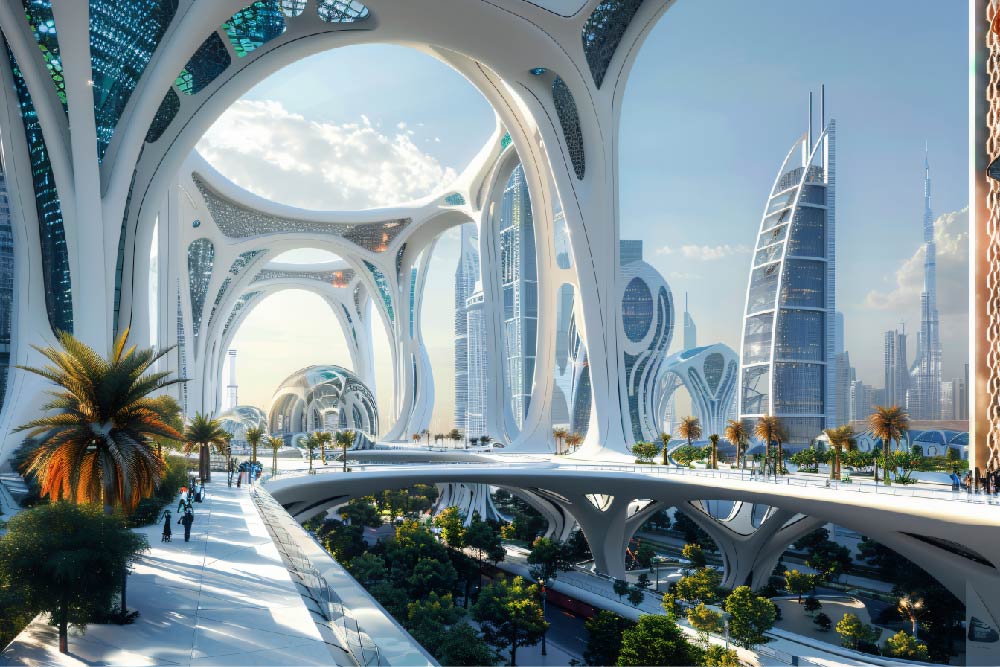
Dubai’s growth has never been accidental, it has always been a story of vision backed by precise execution. With the unveiling of the Dubai 2040 Urban Master Plan, the city is once again preparing for a strategic leap. Designed to align with the emirate’s ambition of becoming the world’s most liveable city, the plan directly impacts land use, mobility, housing, and investment corridors. For Indian HNIs and UHNIs evaluating long-term real estate opportunities, this master plan offers clarity, structure, and significant capital upside.
Here is how Dubai real estate 2040 is poised to reshape the investment landscape, anchored by a visionary framework that redefines density, mobility, and sustainability at scale.
A City Built on Vision: What Is Dubai 2040?
Launched by the Dubai Municipality, the 2040 Urban Master Plan is the seventh strategic urban planning blueprint since 1960. Its ambition is to make Dubai the “best city in the world to live in” by expanding green areas, improving accessibility, and redefining urban density. At its core, the plan revolves around five main pillars:
- Compact and Liveable Communities: Promoting the 20-minute city Dubai model, where 80% of residents’ daily needs are within a 20-minute reach
- Transit-Oriented Development (TOD): Increased reliance on rail, cycling, and walking to reduce traffic congestion and environmental load
- Environmental Sustainability: Dubai green corridors, nature reserves, and doubling of parks and beaches across the emirate
- Economic and Investment Growth: Balanced distribution of land for commercial, tourism, and industrial activity
- Cultural and Heritage Conservation: Protection of historic zones while accommodating smart infrastructure
This foundational framework paves the way for Dubai’s next phase, one defined by polycentric growth, where distinct urban centres emerge as focal points for capital, lifestyle, and long-term value creation.
Five Strategic Centres: A Polycentric Approach to Growth
Dubai’s new growth strategy moves away from linear development to a polycentric city model, bringing high-potential zones into sharper investor focus. Each centre plays a distinct role in driving economic resilience and balanced urban expansion:
- Downtown and Business Bay: Continued development as Dubai’s financial heart
- Dubai Marina and JBR: Residential-tourism hybrid with premium waterfront living
- Expo 2020 Area: Repurposed as an innovation and logistics hub
- Dubai Silicon Oasis: Tech and education cluster
- Historic Deira and Bur Dubai: Cultural and traditional commerce preservation
This city-centre diversification directly feeds into improved housing logic, density management, and investment-grade urban planning.
Housing, Density and Community Amenities
Building on decentralised hubs, the plan also tackles the supply side of residential and social infrastructure. With population growth projected to reach 7.8 million, the Dubai housing supply 2040 targets a wide demographic spanning Emiratis, expatriates, and global citizens. Here’s how the strategy ensures scalability and liveability:
- New Residential Supply: Over 17,000 affordable units and 17,400 plots released for citizen housing
- Density Management: Balanced distribution across the five centres to prevent congestion
- Community-Focused Planning: 25% more land allocated to Dubai community amenities such as schools, clinics, and public services
This people-first planning model naturally flows into the next pillar, how mobility infrastructure is being elevated to support these communities and unlock new investment corridors.
Mobility and the Metro Blue Line
Urban mobility is at the heart of Dubai’s liveability thesis. The Dubai Blue Line Metro, a key component of the city’s smart transit network, is expected to significantly impact property value corridors. The following initiatives are central to this transit overhaul:
- Blue Line Expansion: 30-km line with 14 stations under construction, connecting key growth corridors. Completion targeted for 9 September 2029 (Dubai Metro’s 20th anniversary)
- Dubai TOD Opportunities: Developments near the Blue Line will benefit from walkability, access, and long-term price appreciation
- Enhanced Walkability: 6,500 km of pedestrian paths, 110 walk/cycle bridges, and pedestrian apps to incentivise non-motorised movement
This transit-led growth boosts property values while also setting the stage for Dubai’s next leap – expanding green spaces, coastal access, and open-air living.
Green and Coastal Access: The 20-Minute City Comes Alive
From dense urban cores to open-air living, the Dubai open space plan is no longer aspirational, it is underway. Here’s how the city is anchoring its green and coastal vision:
- Doubling of Green Areas: Over 216,000 trees planted in 2024, with a total green area expansion of 57%
- Beachfront Expansion: Public beach access to increase by 400%, creating value for leisure, hospitality, and branded residences
- The Green Spine: A 1.5 million m² linear corridor linking residential districts with natural assets
These structural enhancements, from green corridors and transit lines to polycentric zoning, are not just quality-of-life upgrades. They function as direct levers for capital growth, rental performance, and long-hold confidence.
What This Means for Investors and End Users
Here’s what investors can expect as Dubai’s 2040 plan reshapes the urban and capital landscape:
- Capital Appreciation Zones: Areas like Creek Harbour, Dubai South, and Expo City stand to benefit most from infrastructure visibility
- Higher Rental Yields: Enhanced connectivity and integrated Dubai community amenities attract long-stay tenants, supporting stable income
- Hold Period Confidence: A transparent roadmap until 2040 provides ideal conditions for a 7-10 year investment horizon
The impact of these investments will unfold in line with Dubai’s phased rollout, each stage aligned with infrastructure delivery and investor holding cycles.
Timeline to 2040: What to Expect and When
With all layers aligned, the master plan will unfold in structured phases, each reinforcing the last. Here’s a simplified timeline:
- 2025-2029: Blue Line construction and first-wave TOD activation, Green Spine early implementation
- 2029-2035: Consolidation of education and healthcare assets; increased open space completion
- 2035-2040: Full realisation of polycentric hubs and peak population migration
Each phase offers distinct entry points for different investor profiles, those seeking early-stage acquisition, mid-hold appreciation, or end-use development.
The Dubai 2040 Urban Master Plan is not just a government roadmap, it is a calibrated urban strategy tailored for resilient capital flows, sustainability, and global competitiveness. For Indian HNIs and UHNIs, it provides the clarity, access, and visibility required to make future-facing real estate decisions.
At SQUAREA, we offer curated access to Dubai’s most sought-after addresses, from waterfront enclaves to branded residences that align with your capital and lifestyle priorities. For tailored investment guidance, reach out at hello@squarea.io or call +91 90 9641 9641.

 The Beginning: When the Red Line Changed Dubai
On 9 September 2009, the Red Line launched - a bold step in a city known for highways and cars. What seemed experimental quickly became essential.
Connecting the airport to Deira, Downtown, Business Bay, Marina, Jebel Ali and later Expo City, it reshaped how Dubai moved - and how it grew.
Areas near stations saw rising demand, stronger occupancy, and increasing property values. Districts like Business Bay, Marina and Jebel Ali evolved into some of the city’s most connected hubs.
The Metro didn’t just support development.
It accelerated it.
The Green Metro Line Expanded Dubai Beyond the Main Corridor
Two years later, on 9 September 2011, the Green Metro Line began service, extending the Metro beyond the main business corridor and into the heart of everyday Dubai.
Connecting Deira, Bur Dubai, Al Qusais, Al Nahda and Dubai Healthcare City, it linked older, densely populated neighborhoods to the wider city, easing congestion and improving daily movement.
Infrastructure must expand ahead of population growth - not after congestion becomes unmanageable.
That philosophy now defines Dubai’s future metro strategy.
Dubai Metro by the Numbers: A System That Became Essential
Over time, Dubai Metro evolved from infrastructure into daily necessity.
Current Performance Highlights
The Beginning: When the Red Line Changed Dubai
On 9 September 2009, the Red Line launched - a bold step in a city known for highways and cars. What seemed experimental quickly became essential.
Connecting the airport to Deira, Downtown, Business Bay, Marina, Jebel Ali and later Expo City, it reshaped how Dubai moved - and how it grew.
Areas near stations saw rising demand, stronger occupancy, and increasing property values. Districts like Business Bay, Marina and Jebel Ali evolved into some of the city’s most connected hubs.
The Metro didn’t just support development.
It accelerated it.
The Green Metro Line Expanded Dubai Beyond the Main Corridor
Two years later, on 9 September 2011, the Green Metro Line began service, extending the Metro beyond the main business corridor and into the heart of everyday Dubai.
Connecting Deira, Bur Dubai, Al Qusais, Al Nahda and Dubai Healthcare City, it linked older, densely populated neighborhoods to the wider city, easing congestion and improving daily movement.
Infrastructure must expand ahead of population growth - not after congestion becomes unmanageable.
That philosophy now defines Dubai’s future metro strategy.
Dubai Metro by the Numbers: A System That Became Essential
Over time, Dubai Metro evolved from infrastructure into daily necessity.
Current Performance Highlights

