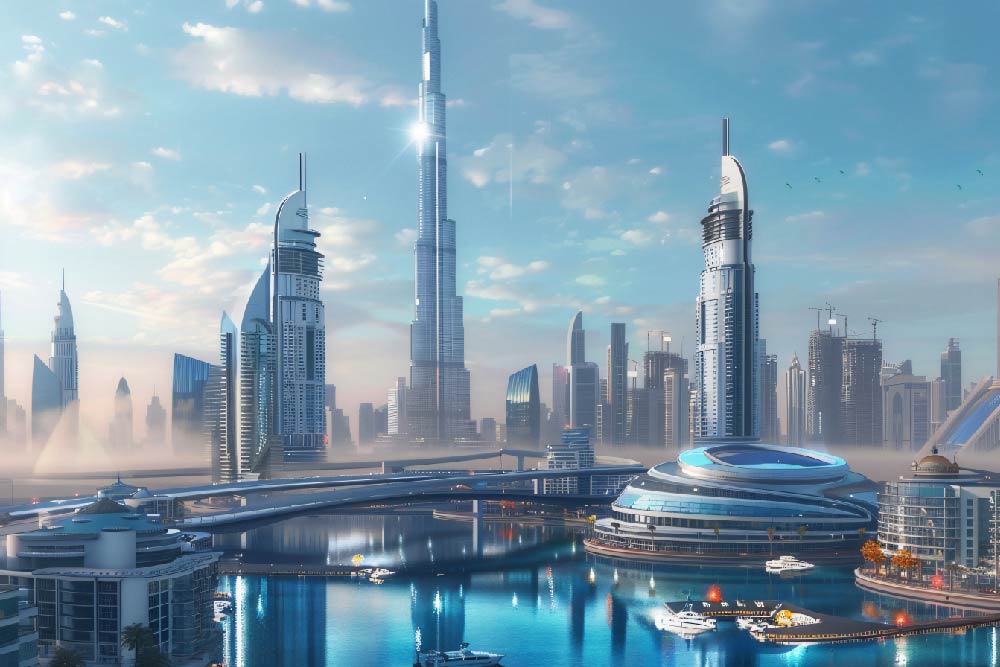
Dubai has entered a new phase of economic momentum with the approval of its largest-ever three-year financial plan – a USD 82.4 billion (AED 302.7 billion) budget for 2026-2028. Beyond its scale, the budget reflects a clear commitment to long-term growth, fiscal strength and global competitiveness.
As the emirate advances its D33 agenda, targeting a doubled Gross Domestic Product (GDP) and a position among the world’s top three cities, the focus is shifting toward disciplined spending and future-ready investment. For HNIs, UHNIs and global investors, this signals a market backed by stability, policy clarity and sustained economic expansion.
With this foundation set, the next step is understanding how the budget channels capital into Dubai’s highest-impact priorities.
A Fiscal Roadmap Designed for Strategic Growth
The record budget prioritises sectors that directly support Dubai’s long-term economic vision. It reinforces diversification, strengthens core infrastructure and enhances the emirate’s global competitiveness. While tourism, finance and logistics continue to anchor growth, the plan also accelerates spending in emerging areas tied to fiscal policies, innovation and economic modernisation. Here’s how:
- Capital allocation strengthens mobility, real estate and business ecosystems: Supporting seamless movement and commercial expansion
- Public-service upgrades enhance resident and investor confidence: Improving overall liveability and economic trust
- Diversification supports stronger GDP and economic growth: Reducing reliance on any single sector
- Innovation-led spending positions the emirate for future industries: Building capabilities in tech, digital economy and smart governance
With these fundamentals established, infrastructure stands out as the strongest driver of Dubai’s next phase of expansion.
Infrastructure & Construction: The Anchor of Dubai’s Investment Strategy
Infrastructure receives the largest share of the budget, with 48 percent directed toward construction, mobility and urban development. This focus reflects Dubai’s push to reinforce its economic foundation and long-term competitiveness. The impact becomes clearer when viewed through the key outcomes it delivers:
- Improved mobility corridors: Seamless access across business, residential and logistics hubs
- Higher real estate appreciation: Metro, road and airport upgrades push long-term value upward
- Stronger economic activity: Construction-led growth fuels jobs, capital inflows and business expansion
- More coherent masterplanning: Large-scale urban design supports Dubai’s global positioning
After this major allocation, the budget shifts toward enhancing the city’s quality of life and social development.
Community Development & Quality of Life as Growth Drivers
Dubai’s long-term success is rooted in its ability to deliver an exceptional standard of living, and the latest budget reflects this with a 28 percent allocation to social development. Here’s how this allocation can support Dubai economic growth:
- Enhanced housing programmes: Supporting inclusive, high-quality community growth
- Strengthened healthcare systems: Expanding access to international-standard medical facilities
- Education-focused investment: Improving global mobility and talent development
- Cultural and recreational advancement: Enriching Dubai’s lifestyle ecosystem and international appeal
With the quality-of-life pillar established, the next focus area is how safety and governance further strengthen long-term investor confidence.
Safety, Security & Governance Through Strategic Investment
Around 18 percent of the budget is directed toward security and justice infrastructure, ensuring Dubai remains one of the most stable and predictable global cities. These investments strengthen long-term governance confidence through:
- Modernised law enforcement systems: Enhancing operational capability and efficiency
- Upgraded emergency and civil defence networks: Improving preparedness and response times
- Stronger justice infrastructure and administrative efficiency: Supporting transparent and reliable processes
- Enhanced public safety initiatives: Reinforcing Dubai’s reputation as a safe global hub
With physical safety reinforced, the city also accelerates its technological transformation.
Government Innovation & Digital Economy
With 6 percent allocated to digital governance and government development, Dubai continues its transition toward a fully modernised and highly efficient administrative ecosystem. These investments strengthen the city’s long-term economic foundation through:
- Smart platforms enabling seamless public services: Streamlining everyday interactions for residents and businesses
- Digital infrastructure supporting automation and tech innovation: Creating a stronger base for high-growth sectors
- AI-driven systems enhancing transparency and ease of doing business: Improving regulatory clarity and operational efficiency
- Future-tech expansion strengthening UAE GDP diversification: Supporting broader economic resilience
Together, these digital upgrades work in tandem with physical infrastructure to reinforce Dubai’s wider economic growth cycle.
Economic Momentum & Investment Outlook Under D33
Dubai’s economy grew 4.4 percent in the first half of 2025, driven by tourism, trade and real estate, making them key contributors to Dubai’s economic growth. Under the D33 agenda, the emirate aims to significantly increase FDI and support the creation of 30 new unicorns, further strengthening its long-term investment outlook.
- Strong job creation supports residential absorption: Sustaining demand across premium and emerging districts
- Tourism-driven spending boosts key sectors: Enhancing revenue flows into hospitality, retail and entertainment
- FDI expansion deepens investor participation: Creating broader capital inflows and project funding
- Economic reforms strengthen global competitiveness: Positioning Dubai as one of the world’s most dynamic business hubs
These macro drivers place Dubai on a sustained upward trajectory. By prioritising mobility, community development, digital governance and economic diversification, the emirate is shaping a resilient, future-ready economy that continues to attract global capital.
At SQUAREA, we help clients interpret these macro shifts and identify Dubai’s most promising investment corridors. As a trusted global real estate advisory firm, we offer curated access to developments aligned with Dubai’s long-term economic vision. For personalised guidance, contact us at hello@squarea.io or +91 90 9641 9641.

 The Beginning: When the Red Line Changed Dubai
On 9 September 2009, the Red Line launched - a bold step in a city known for highways and cars. What seemed experimental quickly became essential.
Connecting the airport to Deira, Downtown, Business Bay, Marina, Jebel Ali and later Expo City, it reshaped how Dubai moved - and how it grew.
Areas near stations saw rising demand, stronger occupancy, and increasing property values. Districts like Business Bay, Marina and Jebel Ali evolved into some of the city’s most connected hubs.
The Metro didn’t just support development.
It accelerated it.
The Green Metro Line Expanded Dubai Beyond the Main Corridor
Two years later, on 9 September 2011, the Green Metro Line began service, extending the Metro beyond the main business corridor and into the heart of everyday Dubai.
Connecting Deira, Bur Dubai, Al Qusais, Al Nahda and Dubai Healthcare City, it linked older, densely populated neighborhoods to the wider city, easing congestion and improving daily movement.
Infrastructure must expand ahead of population growth - not after congestion becomes unmanageable.
That philosophy now defines Dubai’s future metro strategy.
Dubai Metro by the Numbers: A System That Became Essential
Over time, Dubai Metro evolved from infrastructure into daily necessity.
Current Performance Highlights
The Beginning: When the Red Line Changed Dubai
On 9 September 2009, the Red Line launched - a bold step in a city known for highways and cars. What seemed experimental quickly became essential.
Connecting the airport to Deira, Downtown, Business Bay, Marina, Jebel Ali and later Expo City, it reshaped how Dubai moved - and how it grew.
Areas near stations saw rising demand, stronger occupancy, and increasing property values. Districts like Business Bay, Marina and Jebel Ali evolved into some of the city’s most connected hubs.
The Metro didn’t just support development.
It accelerated it.
The Green Metro Line Expanded Dubai Beyond the Main Corridor
Two years later, on 9 September 2011, the Green Metro Line began service, extending the Metro beyond the main business corridor and into the heart of everyday Dubai.
Connecting Deira, Bur Dubai, Al Qusais, Al Nahda and Dubai Healthcare City, it linked older, densely populated neighborhoods to the wider city, easing congestion and improving daily movement.
Infrastructure must expand ahead of population growth - not after congestion becomes unmanageable.
That philosophy now defines Dubai’s future metro strategy.
Dubai Metro by the Numbers: A System That Became Essential
Over time, Dubai Metro evolved from infrastructure into daily necessity.
Current Performance Highlights

